Key Takeaways
- Even the best Shopify stores have trouble ranking if technical issues and bad content stand in the way of search visibility.
- How duplicate content, poor architecture, and under-optimized product pages can ruin organic growth in competitive ecommerce markets
- Here are some SEO tactics you can implement on your Shopify store to help you attract qualified shoppers and turn that organic visibility into actual sales opportunities:
- How technical optimizations, internal linking, structured data, and page experience directly help improve ecommerce search performance over time.
- How organic optimization can provide steady support and reduce overdependence on paid advertising. While building a more sustainable customer acquisition channel.
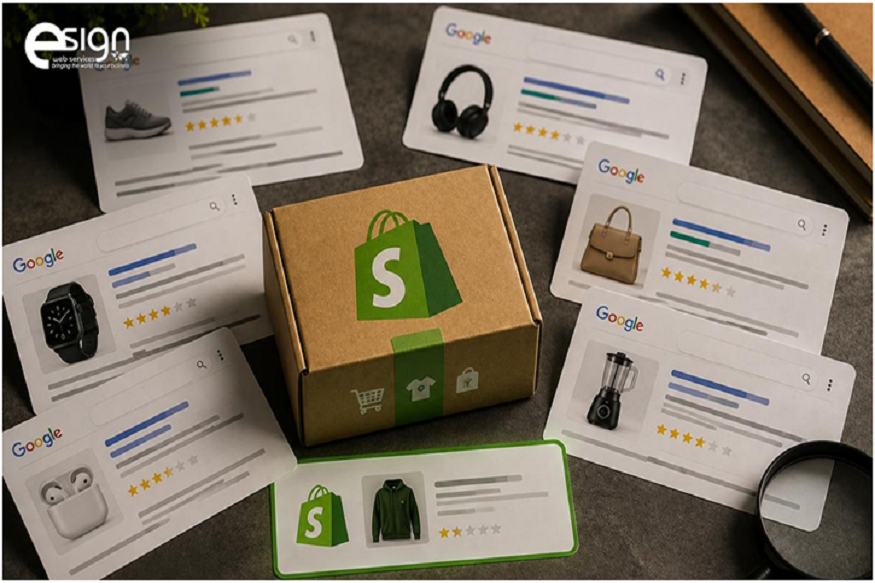
Building a slick Shopify store is just the start. Even with beautiful photography, competitive products, helpful descriptions, and a seamless checkout experience, it can still be hard to attract shoppers through Google Search. Usually, the problem isn’t the product itself. Here is how well search engines can find, understand, evaluate, and match the store pages to relevant customer searches. Competition makes the challenge harder. Shopify says strong store optimization combines on-page, technical, and off-page SEO, with content that matches what customers are actively searching for.
Shopify SEO services offer merchants a structured approach to filling these gaps for those looking for a reliable source of organic ecommerce traffic. This work isn’t just about adding keywords to product descriptions. It includes improving technical accessibility, strengthening collection pages, organizing site architecture, developing useful content, and monitoring performance as customer behavior and search technology change.
Why Many Shopify Stores Fail to Rank
A visually impressive store does not automatically translate into strong organic rankings. Ecommerce websites contain many interconnected pages, filters, products, collections, variants, and navigation paths. Small structural problems can therefore spread across hundreds of URLs.
● Duplicate Content Challenges
Duplicate or near-duplicate content is common in ecommerce. Similar products may share descriptions, filtered collection pages may create overlapping URLs, and multiple product variants may present search engines with pages that appear almost identical.
The practical issue is not simply that two paragraphs look similar. Search engines need to identify which page deserves attention for a particular query. When several pages compete for the same intent, authority can become fragmented. Store owners should review duplicate descriptions, unnecessary URL variations, canonical signals, filters, and indexable pages. Product copy should also explain meaningful differences instead of repeating manufacturer text across numerous items.
● Poor Collection and Product Page Optimization
Many stores spend considerable time polishing the homepage while leaving product and collection pages thin. That is a missed opportunity because these pages often match stronger buying intent.
Effective product page SEO includes clear product information, useful specs, correct titles, relevant copy, descriptive images, and content that addresses questions likely to be asked by customers. SEO for collection pages should tell what the collection is, who it is for, and how the products differ.
● Ignoring the fundamentals of technical SEO
Technical SEO for Shopify can be about indexing, redirects, canonicalization, internal linking, sitemap coverage, page speed, mobile usability, structured data, and crawlable navigation. Core Web Vitals, Google says, are metrics for real-world loading, responsiveness, and visual stability.
Good Core Web Vitals are also one part of a larger page experience Google recommends, but good scores alone don’t guarantee top rankings, it says. Improving speed and usability are good store focuses, but chasing a perfect performance score at the expense of weak content or poor category structure rarely solves the bigger SEO problem.
What Does Shopify SEO Services Include?
A good program integrates technical, commercial, and editorial work, rather than treating SEO as a one-off checklist.
● Technical SEO Checking
An audit will pinpoint any roadblocks that may be limiting visibility. These can be broken internal links, redirect chains, indexing issues, duplicate URLs, poor mobile performance, unnecessary apps slowing down pages, incorrect canonical tags, missing schema markup, or pages that search engines can’t easily discover.
Google Search Console is especially helpful for monitoring indexing, search queries, page performance, and technical alerts. Then, Google Analytics 4 allows teams to study what visitors do once they arrive. The value isn’t just exporting an audit report; it’s interpreting the data correctly.
● Keyword Research for Buyer Intent
A shopper searching “how to choose running shoes” has a different goal from someone searching for “men’s waterproof trail running shoes size 10.” Both searches may matter, but they belong at different stages of the buying journey.
A skilled Shopify SEO consultant maps terms to the pages most capable of satisfying that intent. Informational searches may fit articles or buying guides, while commercially focused terms usually belong on collections, categories, or products. This prevents several pages from competing unnecessarily for the same topic.
● Product and Collection Page Optimization
Store optimization should improve usefulness before increasing word count. You may need stronger introductory copy, better internal links, clearer filtering, improved metadata, or descriptions that set a collection page apart from similar alternatives.
A product page may need unique copy, better specs, clearer headings, useful FAQs, descriptive image text, more helpful links to related products, or more helpful info on materials, sizing, compatibility, and use. Small improvements across hundreds of commercially important pages can create substantial cumulative value.
● Content Marketing and Blog Strategy
A Shopify blog should support purchasing decisions rather than publish generic articles simply to increase page count. Useful content can answer comparison questions, explain product differences, solve common problems, or help customers decide with confidence.
Consider a cookware store. An article about choosing stainless steel versus cast iron can naturally link readers to relevant collections. That content supports the customer’s research process while strengthening the relationship between informational and commercial pages. This is where content strategy and ecommerce SEO work together.
● Structured Data and Rich Results Optimization
Schema markup helps search engines to read important information on a page more clearly.
Structured data can describe products, prices, availability, reviews, organizations, breadcrumbs, or articles, depending on the page. It should reflect what’s on the page, not be added just to improve search appearances. Google Merchant Center can also help surface your products for ecommerce teams by keeping key product data consistent across the relevant Google surfaces.
SEO Strategies That Drive Organic E-commerce Growth
The strongest gains usually come from improving several connected parts of the store rather than relying on one tactic.
● Optimizing Category and Collection Pages
Collection pages often represent some of the most valuable organic landing pages in an ecommerce store. They can target broader commercial searches while helping shoppers compare multiple products. A good collection page should have a clear purpose, useful introductory context, relevant products, intuitive filtering, and internal links to related categories where appropriate.
A Shopify SEO company should also review whether existing collections match actual customer demand. Creating dozens of nearly identical collections for tiny keyword variations can weaken site architecture rather than strengthen it.
● Improving Internal Linking
Internal links display connections between pages and help visitors locate useful products or information. Internal linking can be increased through navigation menus, breadcrumbs, related products, collection links, buying guides, blog content, and contextual recommendations.
For instance, an outdoor lighting guide could link to garden wall lights, pathway lights, and weatherproof fixtures. These links enable users to easily move from research to buy. Internal linking is a simple concept, but requires planning when done at scale.
● Preparing for Search with AI
In May 2026, Google said the average AI Mode query in the US was about three times the length of a traditional Search query. Google said AI Mode had also surpassed one billion monthly users worldwide by then. That shift has implications for Shopify marketing. Product and category content increasingly needs to answer detailed questions clearly, establish context, and provide information that search and AI systems can interpret confidently.
ChatGPT Search and other AI-driven discovery experiences also add another layer to product research. Preparing for these environments does not require abandoning traditional SEO. It means strengthening product information, entity clarity, EEAT signals, and structured content and genuinely useful answers.
Why Partnering With a Shopify SEO Agency Makes a Difference
Running an ecommerce store already involves inventory, customer support, merchandising, logistics, advertising, and conversion optimization. SEO introduces another layer of technical and strategic work.
● Platform-Specific Expertise
Shopify has its own architecture, themes, apps, collections, product structures, and technical limitations. Experienced specialists understand how these elements interact. A Shopify SEO agency can distinguish between a platform limitation that needs a practical workaround and a genuine technical problem requiring correction. That platform familiarity often prevents unnecessary changes that could create new indexing or usability problems.
● Scalable SEO Strategies
A store with 30 products and one with 30,000 products should not follow the same optimization process. Large stores need prioritization. A capable Shopify SEO company can segment pages according to revenue potential, demand, performance, margins, seasonality, and technical condition. High-impact sections can then be improved first, instead of trying to rewrite every product description at once. Scalability is one of the biggest differences between occasional SEO activity and a sustainable program.
● Continuous Performance Monitoring
Organic performance changes. Products go out of stock. New collections launch. Competitors improve their content. Search demand shifts. Google updates its search experience. AI-led discovery evolves. A Shopify SEO consultant should therefore monitor visibility, traffic quality, indexing, important landing pages, conversions, and changing customer behavior instead of treating optimization as finished after launch. Google Search Console and Google Analytics 4 help provide evidence, but useful reporting should explain what changed, why it matters, and what the business should do next.
Build Organic Growth That Lasts
Successful Shopify SEO goes well beyond placing keywords into product copy. Stores need solid technical foundations, useful product information, organized collections, strong internal links, helpful content, good page experience, and continuous performance review. Paid advertising still has an important role because it can create visibility quickly.
Organic growth offers a different advantage: useful pages can continue attracting potential customers after the initial optimization work. The tradeoff is that SEO usually requires more patience before momentum becomes visible. For businesses that want a more sustainable acquisition mix, Shopify SEO services can support qualified traffic without making the store completely dependent on paid campaigns.
eSign Web Services can help you build a Shopify SEO strategy designed around your business goals, product range, customers, and long-term growth priorities. Rather than chasing rankings alone, you can focus on improving organic visibility, attracting stronger buying intent, and turning search discovery into meaningful ecommerce opportunities.
Frequently Asked Questions
What are the Shopify SEO services?
Technical improvements, keyword and intent research, product and collection optimization, internal linking, content planning, structured data, performance monitoring, and ongoing work to improve relevant organic visibility.
Why is Shopify SEO important for e-commerce stores?
Shopify SEO helps search engines discover and understand your important pages, making them more useful for shoppers. It can get more visibility that can attract potential customers who are looking for products, instead of only relying on paid advertising.
How long does it take to see results from Shopify SEO?
There is no time frame. The results depend on the competition, the history of the site, the technical condition, the quality of the content, the demand for the product, the existing authority and the amount of improvement needed. There may be some movement in the early changes, but meaningful organic growth takes time.
What does a Shopify SEO consultant do?
A typical process would include technical issues assessment, commercial search opportunities identification, product & collection assessment, content planning, performance data analysis, and business value-based prioritization for improvement.
How to choose the best SEO agency for Shopify?
Look for relevant platform experience, clear processes, realistic expectations, transparent reporting, and the ability to link SEO activity to business outcomes.





Be First to Comment